The story
From store floor to platform.
Stores first, software second
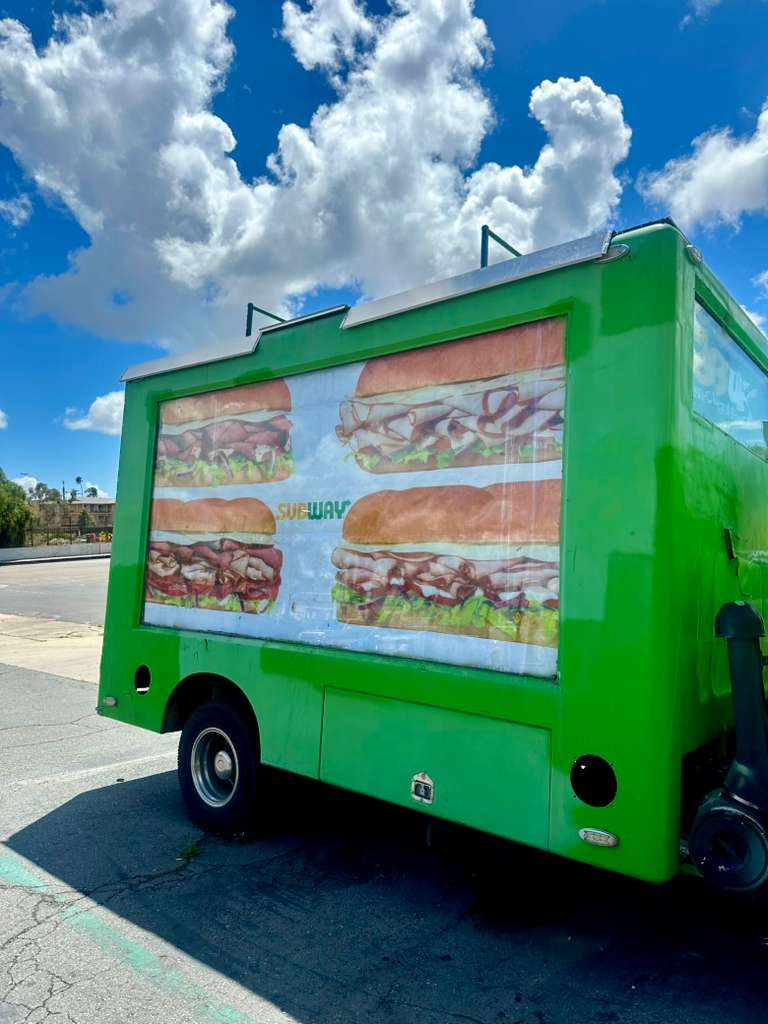
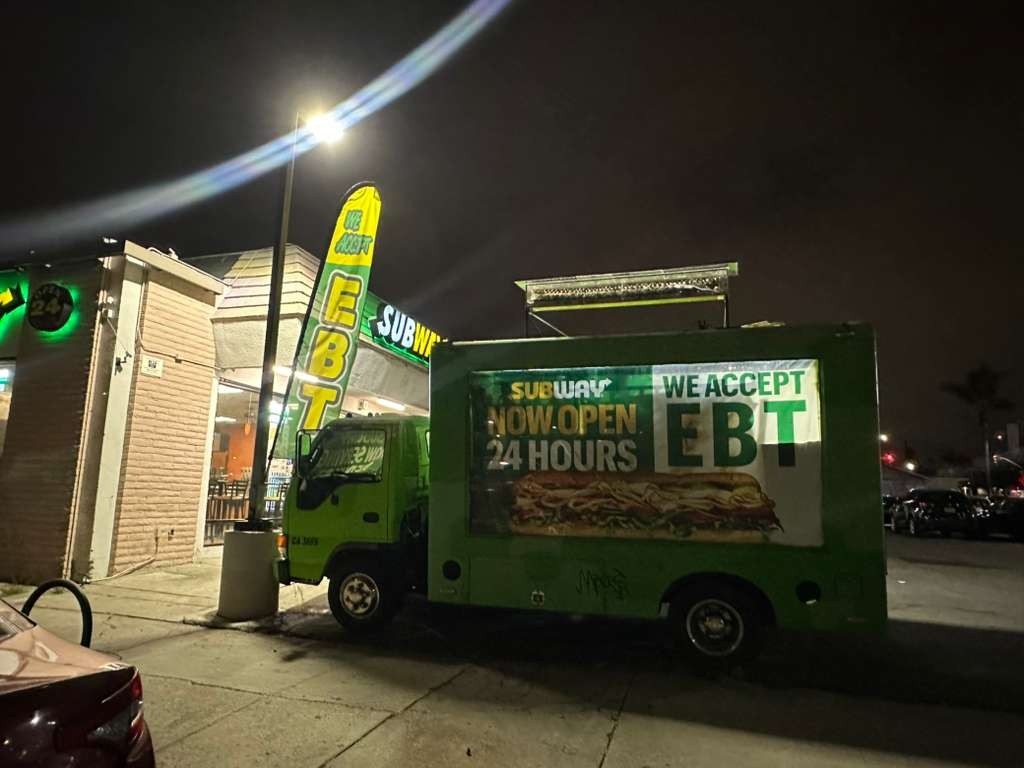
We run multi-unit Subway operations across San Diego — stores we've built from the ground up and operated every day since.
The phone was the leak
At any given moment, ~30% of our Subway phone calls went unanswered. Not because we didn't care — because the team was making sandwiches, the line was out the door, and the phone rang at the worst possible time. Every missed call was a customer who'd just order somewhere else. Every 1-star review that sat unresponded was Google's algorithm penalising us. Every catering customer who didn't reorder was $500+ that vanished.
The usual fixes didn't hold
We hired more staff. Bought call-routing software. Used review-management vendors. Each tool solved one slice. None of them talked to each other. None were built for an operator running 5, 10, 20+ Subway stores. So we built our own.
Maya, then everything around her
First it was Maya — an AI voice agent who answered every call across our stores. Then a reviews engine that replied to Google reviews and asked every customer for one. Then a reactivation engine for catering customers we hadn't heard from in 60 days. Then the outbound prospecting system that brought new B2B catering accounts in.
Our stores were the test
Each piece worked in our own stores before we let anyone else touch it. That's the bar. If it didn't move the needle for us — on revenue, on reviews, on reactivation rate, on saved hours — we didn't ship it.
Then other operators asked
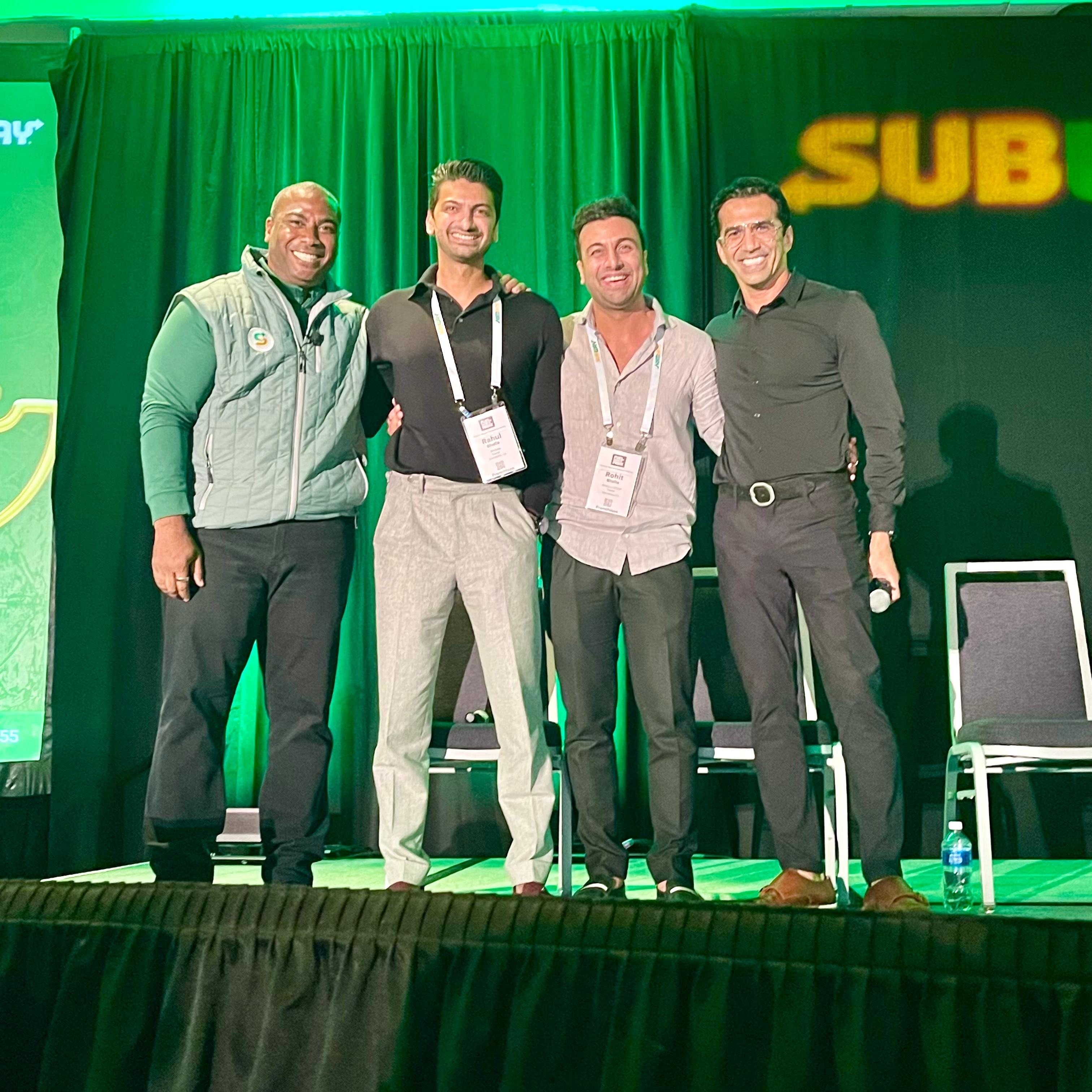
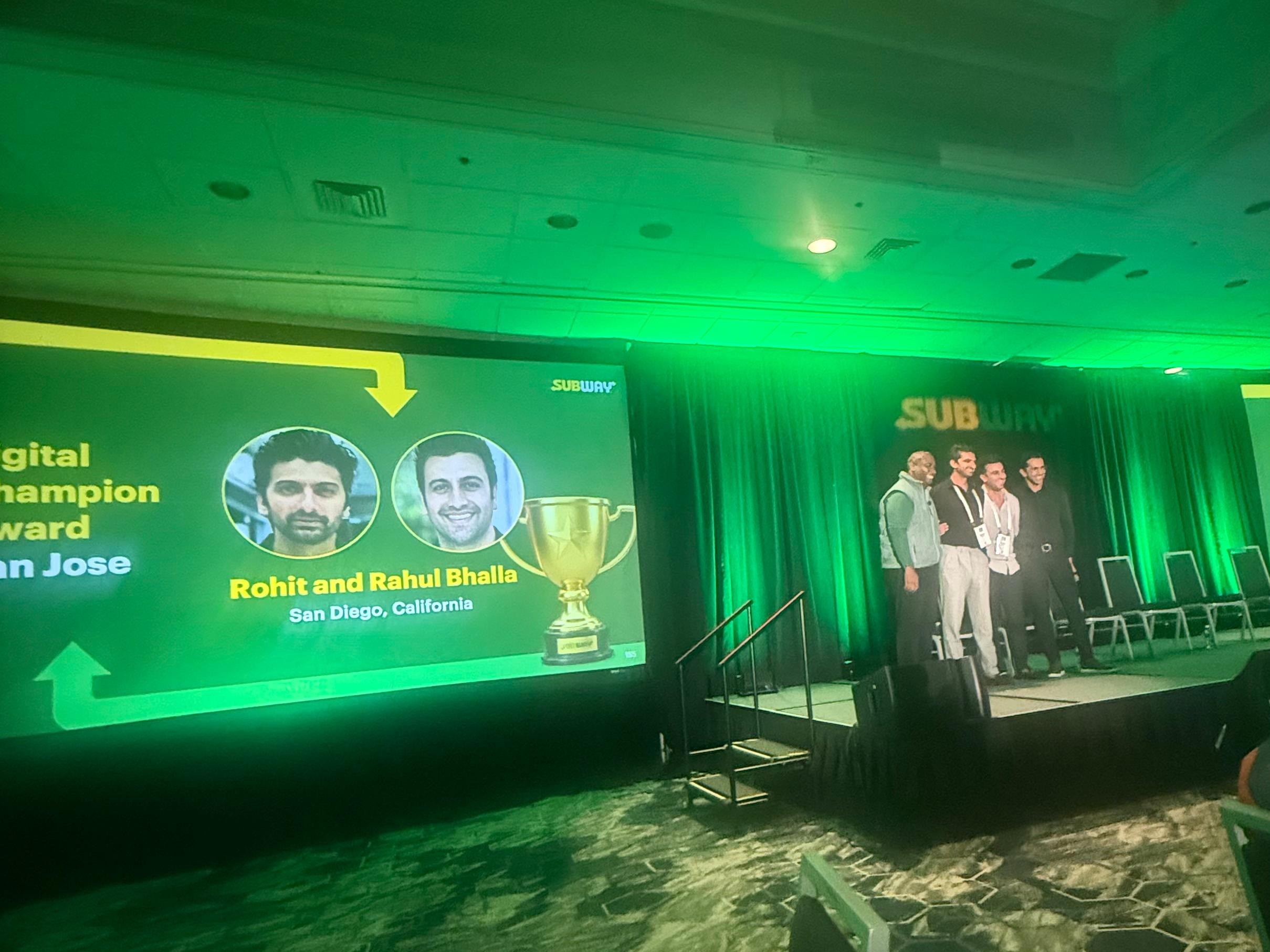
When they saw what we'd built, they asked if they could buy it. So we packaged it as Nisra, named after a word sitting at the intersection of our family's two heritages — Sanskrit निसृ, support, and Arabic naṣr, victory — and started shipping.
Catering sales growth
Directional — average across our own stores after four months. No axis, because we're not going to pretend a shape is a number.